
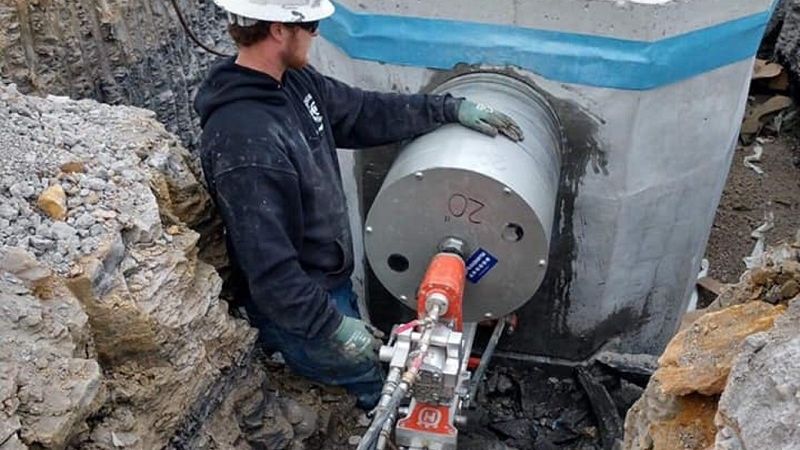
Why Core Drilling Diameter Matters
The diameter of a core-drilled hole determines what can pass through it, how it must be sealed, and whether it meets code requirements for the intended application. Ordering the wrong size wastes time and money: a hole that is too small requires re-drilling, while a hole that is too large creates unnecessary fire stopping and sealing challenges. This guide provides a definitive reference for core drilling sizes and their applications.
At REDCORE Concrete Cutting & Core Drilling, we maintain diamond core bits in every standard size from 1 inch to 48 inches. Our operators help contractors and homeowners select the right diameter for their specific application every day.
Small Diameter Core Holes (1 to 3 Inches)
Small core holes are among the most common in both residential and commercial construction.
- 1 inch to 1.5 inches: Electrical conduit (single circuit), small plumbing supply lines, thermostat wiring, low-voltage cable, and security system wiring.
- 2 inches: Larger electrical conduit runs, small PVC drain lines, gas piping sleeves, and data cable bundles. This is a common size for multiple low-voltage cables routed through a single penetration.
- 2.5 inches: Often specified for 2-inch pipe sleeves where clearance for insulation or fire stopping is needed around the pipe.
- 3 inches: Mini-split line set penetrations (the most common residential core drilling request), 2-inch drain lines with sleeve clearance, and larger conduit runs.
Medium Diameter Core Holes (3.5 to 8 Inches)
Medium-diameter holes serve the majority of plumbing, HVAC, and mechanical applications.
- 3.5 to 4 inches: Dryer vent penetrations, larger mini-split line sets, 3-inch drain pipes, radon mitigation system pipes, and bathroom exhaust fan ducting. The 4-inch core bit is one of the most frequently used sizes in our inventory.
- 5 inches: Radon mitigation pipes (larger systems), 4-inch drain and sewer pipes with clearance, and commercial exhaust fans. The EPA recommends professional radon mitigation for homes with elevated radon levels, and 5-inch penetrations are standard for higher-capacity systems.
- 6 inches: Residential ductwork penetrations, 4-inch pipes with generous clearance, range hood exhaust ducts, and multiple conduit bundles. This is a common size for HVAC branch ducts passing through concrete walls.
- 7 to 8 inches: Larger ductwork, 6-inch sewer pipe penetrations, commercial exhaust systems, and fresh air intake ducts for ERV/HRV units.
Need this done professionally?
REDCORE provides free, no-obligation estimates. Same-day service available.
Get Free Estimate →Or call: +1 (413) 666-2026Large Diameter Core Holes (9 to 18 Inches)
Large-diameter core drilling serves commercial and industrial applications requiring significant pipe or duct passage.
- 9 to 10 inches: Commercial ductwork, large sewer mains, fire sprinkler risers, and industrial piping. These sizes require heavy-duty core drilling rigs with significant torque and stable mounting.
- 12 inches: A standard size for commercial duct penetrations, large pipe clusters, and multi-conduit electrical risers. Twelve-inch core drilling is common in commercial building construction and renovation.
- 14 to 18 inches: Large commercial and industrial ductwork, pipe clusters, and mechanical risers. These holes are typically found in commercial high-rises, hospitals, and industrial facilities where large mechanical systems pass through concrete floors and walls.
Extra-Large Diameter Core Holes (20 to 48 Inches)
Extra-large core holes are specialized applications found primarily in industrial and heavy commercial construction.
- 20 to 24 inches: Large mechanical risers, industrial ventilation ducts, manhole access openings, and equipment pass-throughs. The Concrete Sawing & Drilling Association (CSDA) classifies these as large-diameter operations requiring specialized equipment and experienced operators.
- 24 to 36 inches: Sump pit openings, large equipment access holes, industrial pipe risers, and specialty access openings. These holes require the most powerful core drilling rigs and substantial anchoring systems.
- 36 to 48 inches: Industrial access openings, large manhole penetrations, and specialty demolition applications. Core holes at these diameters approach the practical limit of rotary core drilling; larger openings are typically cut with wall saws or wire saws instead.
How to Specify the Right Size
When ordering core drilling, use this sizing guideline:
- For pipe penetrations: Order the core hole at least 1 inch larger than the outside diameter of the pipe to allow for a sleeve, alignment tolerance, and fire stopping material.
- For insulated pipes: Add the insulation thickness (both sides) to the pipe outside diameter, then add 1 inch for clearance.
- For conduit bundles: Calculate the total cross-sectional area of the bundle, select a core diameter that accommodates the bundle with clearance, and verify that the selected size allows proper fill ratio per the National Electrical Code.
- For ductwork: Match the core diameter to the duct outside diameter plus clearance for insulation and fire stopping. Round up to the next available standard core bit size.
REDCORE Core Drilling Capabilities
REDCORE Concrete Cutting & Core Drilling stocks core bits in every standard diameter from 1 inch to 48 inches and maintains the drilling rigs to handle any size job. Whether you need a single 3-inch mini-split penetration or a series of 24-inch industrial cores, we have the equipment and expertise to deliver. Contact us to discuss your project specifications and receive a free estimate.