
The Silica Dust Hazard in Concrete Cutting
Concrete is composed of cement, aggregate (sand and gravel), and water. A significant portion of these materials, particularly the sand component, consists of crystalline silica (quartz). When concrete is cut, drilled, or ground, the mechanical action fractures the silica crystals into microscopic particles that become airborne. These respirable particles, smaller than 10 micrometers in diameter, can penetrate deep into the lungs and cause serious, irreversible health conditions.
The health risks of silica dust exposure are well documented and include silicosis (an incurable lung disease), increased risk of lung cancer, chronic obstructive pulmonary disease (COPD), and kidney disease. Because of these serious risks, OSHA's respirable crystalline silica standard for construction (29 CFR 1926.1153) establishes strict permissible exposure limits and requires specific engineering controls for concrete cutting operations.
OSHA Silica Dust Regulations for Concrete Cutting
OSHA's silica standard, which took full effect in 2018, sets a permissible exposure limit (PEL) of 50 micrograms per cubic meter of air, averaged over an 8-hour workday. For concrete cutting operations, the standard provides two compliance paths:
Table 1 Compliance
Table 1 of the standard lists specific construction tasks, including concrete cutting, and prescribes the engineering controls and work practices required for each. If a contractor follows Table 1 exactly, no air monitoring is required. For concrete cutting with stationary saws (flat saws and wall saws), Table 1 requires:
- Use of a saw equipped with an integrated water delivery system that continuously feeds water to the blade
- Operation and maintenance of the system per manufacturer's instructions
For concrete cutting with handheld saws, Table 1 allows either wet cutting with continuous water feed or dry cutting with an integrated dust collection system equipped with a HEPA filter.
Alternative Compliance (Air Monitoring)
Contractors who do not follow Table 1 exactly must conduct air monitoring to measure actual worker silica exposure and implement whatever controls are necessary to keep exposure below the PEL. This path is more complex and expensive, which is why most professional concrete cutting companies, including REDCORE, follow the Table 1 approach.
Need this done professionally?
REDCORE provides free, no-obligation estimates. Same-day service available.
Get Free Estimate →Or call: +1 (413) 666-2026Professional Dust Control Methods
Wet Cutting
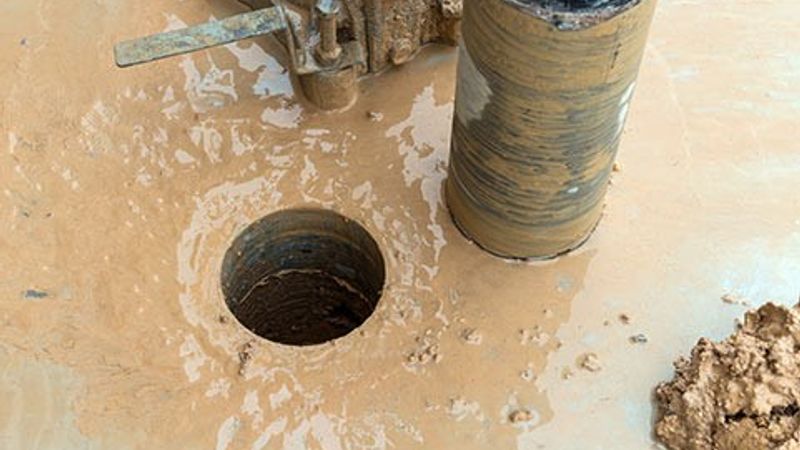
Wet cutting is the primary and most effective dust control method for concrete cutting. Water is delivered to the blade or bit at the point of contact with the concrete, capturing silica particles before they become airborne. The water mixes with the cut material to form a slurry that is contained and managed rather than released as airborne dust.
Wet cutting reduces airborne silica dust by 80 to 99 percent compared to dry cutting. It is the standard method for flat saws, wall saws, and core drills, and it is the method specified in OSHA Table 1 for these tools. REDCORE uses wet cutting on virtually every project.
Vacuum Dust Collection (Dry Methods)
When wet cutting is not feasible (for example, in areas where water cannot be used due to electrical hazards or sensitive materials), vacuum dust collection with HEPA filtration is the alternative. These systems attach directly to the cutting tool and capture dust at the source before it disperses.
HEPA (High-Efficiency Particulate Air) filters capture 99.97 percent of particles 0.3 micrometers and larger, making them effective for silica dust. However, vacuum systems are generally less effective than wet cutting for high-volume cutting operations and require regular filter maintenance.
Containment and Isolation
For interior cutting in occupied buildings, containment barriers supplement the primary dust control method:
- Plastic sheeting barriers: Heavy-duty polyethylene sheeting is used to isolate the cutting area from adjacent occupied spaces, preventing any residual dust from migrating through the building.
- Negative air pressure: In some commercial applications, a negative air machine equipped with HEPA filtration creates negative pressure in the work area, drawing air inward through any gaps in the containment barrier rather than allowing dust to escape outward.
- Air scrubbers: Portable HEPA air filtration units can be placed in and around the work area to continuously filter the ambient air during and after cutting operations.
Slurry Management
Wet cutting solves the airborne dust problem but creates a slurry management challenge. Concrete cutting slurry, a mixture of water and fine concrete particles, has a high pH (12 or above) and must not enter storm drains, waterways, or landscaping. Professional contractors contain and manage slurry through:
- Vacuum recovery systems that collect slurry during cutting
- Berms and barriers that contain slurry in the work area
- Squeegees and wet vacuums for cleanup after cutting
- Proper disposal at approved facilities, not down storm drains
The EPA's NPDES stormwater program prohibits the discharge of concrete slurry and washwater into storm drainage systems, and Massachusetts enforces these requirements.
What Homeowners and Building Occupants Should Know
If concrete cutting is being performed in or near your home or business, here is what to expect from a contractor using proper dust control:
- The work area will be isolated from occupied spaces if cutting is performed indoors
- You should not see visible dust clouds during wet cutting operations
- There will be water and slurry in the immediate work area, which the contractor will clean up
- After the job, a light film of residual dust may settle in the immediate area, which can be cleaned by wet-mopping
- If you have respiratory sensitivities, stay away from the immediate work area during cutting
REDCORE's Dust Control Commitment
REDCORE Concrete Cutting & Core Drilling uses wet cutting as our standard practice on every job, fully compliant with OSHA Table 1 requirements. We manage slurry containment and cleanup as part of every project, and we use containment barriers for interior work in occupied buildings. Our commitment to dust control protects our workers, our clients, and the community. Contact us with any questions about dust management for your upcoming project in Springfield, MA or Western Massachusetts.