
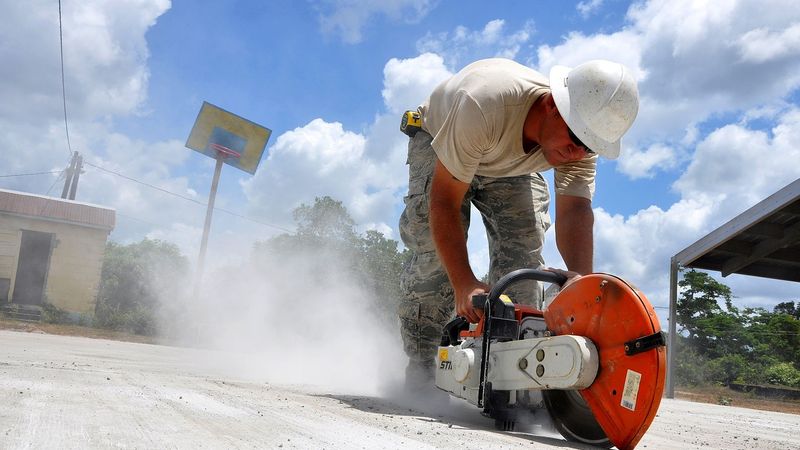
Understanding Concrete Cutting Noise
Concrete cutting is one of the louder construction activities, and if you are planning a project that involves slab sawing, wall sawing, or core drilling, your neighbors will likely notice. Being proactive about noise management protects your relationships with neighbors, helps you comply with local noise ordinances, and demonstrates the consideration that communities expect during construction work.
This guide provides realistic expectations for concrete cutting noise levels, how long the noise lasts, and what steps can be taken to minimize the impact.
How Loud Is Concrete Cutting?
Noise levels from concrete cutting equipment vary by the type of equipment, the material being cut, and environmental conditions:
- Flat saws (slab saws): 95 to 110 decibels at the source. This is comparable to a loud motorcycle or a rock concert. At 50 feet away, the level drops to approximately 80 to 95 decibels, still clearly audible.
- Wall saws: 90 to 105 decibels at the source. Wall saws tend to be slightly quieter than flat saws because the blade is partially enclosed by the wall being cut.
- Core drills: 80 to 95 decibels at the source. Core drilling is the quietest concrete cutting method, especially when drilling smaller diameters. Wet core drilling further reduces noise compared to dry methods.
- Hand saws (cut-off saws): 100 to 115 decibels at the source. Gas-powered hand saws are the loudest concrete cutting tools. Electric hand saws are somewhat quieter.
For context, OSHA's occupational noise standards require hearing protection for workers exposed to noise levels above 85 decibels over an 8-hour workday. Most concrete cutting operations exceed this threshold at close range.
How Long Does the Noise Last?
One important factor that distinguishes concrete cutting from other noisy construction activities is its duration. Concrete cutting is typically measured in hours, not days or weeks:
- Single core drill hole: 10 to 45 minutes of active drilling depending on diameter and wall thickness
- Mini-split installation penetration: 15 to 30 minutes total
- Basement bathroom trench cutting: 2 to 4 hours for a typical bathroom
- French drain perimeter cutting: 3 to 6 hours depending on basement size
- Egress window opening: 1 to 3 hours for the cutting phase
- Door opening in foundation wall: 2 to 4 hours
Active cutting is not continuous within these time windows. There are breaks for equipment adjustment, water management, layout verification, and concrete removal between cuts. The actual blade-on-concrete time is typically 40 to 60 percent of the total job duration.
Need this done professionally?
REDCORE provides free, no-obligation estimates. Same-day service available.
Get Free Estimate →Or call: +1 (413) 666-2026Massachusetts Noise Ordinances
Most Massachusetts municipalities regulate construction noise through local ordinances. While specifics vary by community, common provisions include:
- Permitted hours: Construction activity, including concrete cutting, is typically permitted between 7:00 AM and 6:00 PM on weekdays. Some communities extend to 8:00 PM in summer months.
- Weekend restrictions: Saturday work is often permitted with shorter hours (8:00 AM to 5:00 PM is common). Sunday and holiday work is restricted or prohibited in many communities.
- Decibel limits: Some municipalities set specific decibel limits at the property line, typically 75 to 85 decibels during permitted construction hours.
Always check with your local building department or town clerk for the specific noise regulations in your community before scheduling concrete cutting work. Springfield, Chicopee, Holyoke, Westfield, and other Western Massachusetts communities each have their own ordinance provisions.
Noise Mitigation Strategies
While concrete cutting noise cannot be eliminated, several strategies reduce its impact on neighbors:
- Schedule wisely: Plan cutting during mid-day hours (9:00 AM to 4:00 PM) when most neighbors are at work. Avoid early morning starts and late afternoon work when neighbors are home.
- Notify neighbors in advance: A simple courtesy notice explaining what work is planned, when it will occur, and how long it will last goes a long way toward maintaining good neighbor relations.
- Choose quieter methods when possible: Core drilling is significantly quieter than flat sawing. Electric saws are quieter than gas-powered saws. Discuss equipment options with your concrete cutting contractor.
- Use wet cutting: Wet cutting methods are generally quieter than dry cutting because the water reduces blade friction and vibration noise.
- Close windows and doors: For interior cutting, keeping the building closed reduces noise transmission to the exterior. For neighbors, closing windows on the side facing the work helps reduce interior noise levels.
Communication Is Key
The most effective noise management strategy is clear communication. Notify affected neighbors before work begins, provide your contact information in case they have concerns, and follow through on any commitments about timing and duration. Most neighbors are understanding about temporary construction noise when they are informed and treated with respect.
REDCORE's Approach to Noise Management
REDCORE Concrete Cutting & Core Drilling is committed to being good neighbors on every job site. We work within local noise ordinance hours, use wet cutting methods that reduce noise, and complete our work as efficiently as possible to minimize the duration of noise exposure. Contact us to discuss your project and any noise management concerns.