
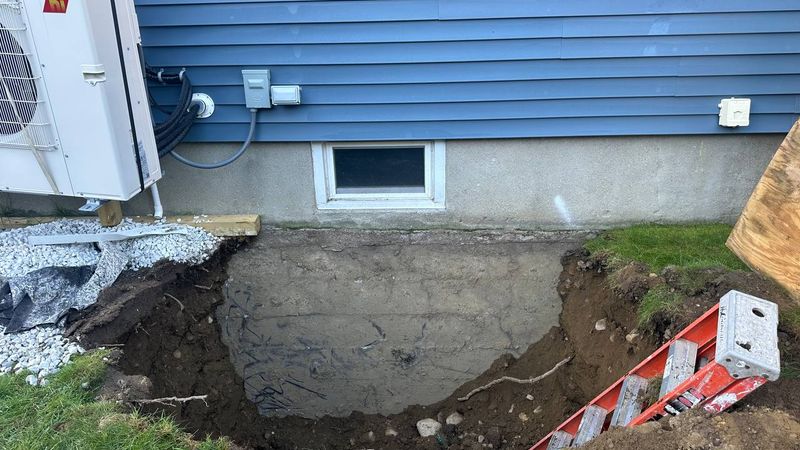
Why Home Additions Require Concrete Cutting
When you add a new room, garage, sunroom, or second story to your Massachusetts home, the new construction must connect to the existing building structurally and mechanically. Since your existing home sits on a concrete foundation with concrete floors, walls, and footings, making those connections requires professional concrete cutting. Understanding the scope of concrete cutting in advance helps you budget accurately and coordinate the work with your general contractor and trades.
Foundation Connection Cuts
The most significant concrete cutting in a home addition project is at the junction between the existing foundation and the new construction:
- Foundation wall openings: A door or passage between the existing home and the new addition requires cutting an opening through the existing foundation wall. This is a structural modification that requires engineering review and a building permit per the Massachusetts State Building Code.
- Slab connections: If the addition floor level needs to match the existing slab level, the perimeter of the existing slab may need cutting to create a clean tie-in for the new floor.
- Footing modifications: In some cases, the existing footing must be modified to support the new structural connection. This may require selective cutting and removal of footing concrete.
Utility Connection Penetrations
Every home addition requires mechanical, electrical, and plumbing connections to the existing house systems. These connections frequently require penetrations through existing concrete:
- Plumbing: Drain lines, water supply lines, and vent piping for the addition must connect to the existing system. This often requires slab cutting in the existing basement for drain line extensions and core drilling through foundation walls for pipe routing.
- HVAC: Ductwork or piping extensions from the existing heating and cooling system require penetrations through foundation walls or floor slabs. Mini-split installations for addition spaces require line set penetrations.
- Electrical: Conduit and wiring from the existing electrical panel to the addition may need to pass through concrete foundation walls.
- Gas: If the addition includes gas appliances (furnace, fireplace, range), gas piping penetrations through the foundation are needed.
Need this done professionally?
REDCORE provides free, no-obligation estimates. Same-day service available.
Get Free Estimate →Or call: +1 (413) 666-2026Common Addition Types and Their Cutting Requirements
Room Addition (One Story)
A single-story room addition typically requires a foundation wall opening for the passage between the existing home and the new room, plus utility penetrations for plumbing, HVAC, and electrical connections. Total concrete cutting scope: moderate.
Garage Addition
A garage addition connected to the house requires a door opening through the existing foundation wall or exterior wall. If the garage includes a utility sink, heating system, or electrical sub-panel, additional penetrations are needed. Garage additions also require the existing driveway to be cut for the new approach. Total concrete cutting scope: moderate to significant.
Basement-Level Addition
Adding living space at the basement level is one of the most concrete-cutting-intensive addition types. The full foundation wall opening, plumbing rough-in through the existing slab, and HVAC penetrations all involve substantial concrete cutting. Total concrete cutting scope: significant.
In-Law Suite or Accessory Dwelling
These additions typically include a full kitchen, bathroom, and dedicated mechanical systems, resulting in extensive plumbing and HVAC concrete cutting requirements similar to a small house. Total concrete cutting scope: significant.
Scheduling Concrete Cutting in the Addition Timeline
Concrete cutting for home additions typically occurs at two points in the project timeline:
- Early phase: Foundation wall openings and major structural cuts happen early, often before or immediately after the new foundation is poured. These cuts must be done before framing and are often on the critical path of the project schedule.
- Rough-in phase: Utility penetrations and slab cuts for plumbing rough-in happen after framing is complete and before insulation, drywall, and finish work begin.
Coordinate concrete cutting scheduling closely with your general contractor to avoid delays that cascade through the project timeline.
Permits and Engineering
Home additions in Massachusetts require building permits, and any concrete cutting that involves structural modifications (foundation wall openings) will be part of the permitted scope. Your architect or structural engineer will specify the opening dimensions, header requirements, and temporary shoring needed for foundation wall cuts. The building inspector will review the structural modifications during scheduled inspections.
REDCORE for Home Addition Projects
REDCORE Concrete Cutting & Core Drilling serves homeowners and general contractors throughout Springfield, MA and Western Massachusetts with the concrete cutting services that home addition projects require. From foundation wall openings to utility penetrations, we deliver precise, professional cuts that keep your addition project on schedule. Contact us for a free estimate during your project planning phase.